AudienceMx - Article
The Seasonal Content Calendar: Planning LinkedIn Posts Around Industry Events and Trends
Discover how to build a LinkedIn seasonal content calendar that aligns your posts with industry events and trends for consistent engagement.

Building a consistent LinkedIn presence feels impossible when you're juggling client work, strategic planning, and the pressure to stay relevant. Every week, you face the same question: what should I post about today? Without a framework, your content becomes reactive instead of strategic. You end up scrambling for ideas, missing opportunities to capitalize on industry moments, and watching your engagement plateau.
The solution isn't working harder - it's working smarter with a LinkedIn seasonal content calendar. This approach transforms your content strategy from chaotic and last-minute into intentional, timely, and aligned with both your audience's needs and the moments that matter most in your industry. A well-structured seasonal calendar lets you plan months ahead while remaining flexible enough to capture unexpected trends and opportunities.
In this guide, we'll walk you through building a year-round content strategy that leverages industry events, seasonal trends, and cultural moments while maintaining your core messaging pillars. You'll discover how to map your calendar, balance different content types, and automate your planning so consistency becomes effortless.
Understanding the Power of Seasonal Content Planning
Seasonal content planning isn't just about posting during holidays or industry conferences. It's about recognizing the natural rhythms of your industry and your audience's attention patterns throughout the year. When you align your content with these moments, you tap into existing conversations, increased search volume, and heightened engagement. Learn more in our post on How AI Raises the Value of Human Voice in Professional Content.
Consider the difference between posting a generic leadership tip in July versus publishing a thoughtful piece on leadership transitions during your industry's peak hiring season. The second approach resonates because it addresses what's on people's minds right now. It signals that you understand the landscape and can offer timely, relevant insights.
A seasonal calendar creates several competitive advantages. First, it reduces decision fatigue. Instead of brainstorming daily, you've already mapped content themes months in advance. Second, it ensures you never miss critical moments - whether that's industry conferences, product launches, or seasonal business cycles. Third, it allows you to batch-create content, which is far more efficient than creating one post at a time. Finally, it demonstrates consistency and reliability to your audience, which builds trust and authority over time.
The most successful LinkedIn creators aren't those posting randomly whenever inspiration strikes. They're the ones who've built systems that ensure they show up consistently, with relevant content at exactly the right moments.
The psychology behind seasonal content also matters. Your audience's needs shift throughout the year. In January, they're focused on goal-setting and new strategies. In Q4, they're thinking about year-end reviews and planning for the next year. By anticipating these shifts, you position your content as genuinely helpful rather than self-promotional.

Building Your Core Content Pillars
Before you map seasonal moments, you need to establish your core content pillars. These are the fundamental themes that define your expertise and value proposition. Your seasonal calendar will weave these pillars throughout the year, ensuring your brand voice remains consistent while capitalizing on timely opportunities. Learn more in our post on Custom ICP-Based Content Plans: Align Every Post to Your Ideal Client.
Core content pillars typically fall into three to five categories. For a marketing professional, this might include thought leadership on emerging trends, tactical tips for campaign execution, industry insights and analysis, success stories and case studies, and personal growth and professional development. For a consultant, pillars might center on industry-specific challenges, problem-solving frameworks, client success stories, market outlook, and leadership philosophy.
The key is choosing pillars that reflect your genuine expertise and align with what your audience needs from you. Each pillar should be broad enough to sustain multiple posts throughout the year, yet specific enough to maintain focus and authority.
Mapping Your Pillars to Seasonal Moments
Once your pillars are defined, the next step is identifying which pillars naturally align with different seasons and industry moments. This isn't about forcing connections - it's about recognizing where your expertise intersects with your audience's seasonal concerns.
For example, a professional development pillar might be strongest in January when people are setting goals, in May and June when hiring accelerates, and in September as people return from summer. A market outlook pillar gains prominence during earnings seasons and before major industry conferences. A tactical tips pillar can be evergreen, but certain seasons - like back-to-school for education-focused professionals or holiday season for retail consultants - create natural opportunities for relevant execution content.
Create a simple matrix with your pillars on one axis and months on the other. Mark which pillars should receive emphasis during each season. This visual overview ensures you're not neglecting any pillar while also recognizing natural seasonal strengths.
Identifying Industry Events and Trend Cycles
The most impactful seasonal content calendars are built on a foundation of industry-specific events and trend cycles. These moments create natural conversation hooks and increased audience attention. Your job is to identify them, plan content around them, and ensure you're contributing meaningfully to these conversations. Learn more in our post on Vertical Video on LinkedIn: Why Short-Form Content Is Reshaping Professional Networking.
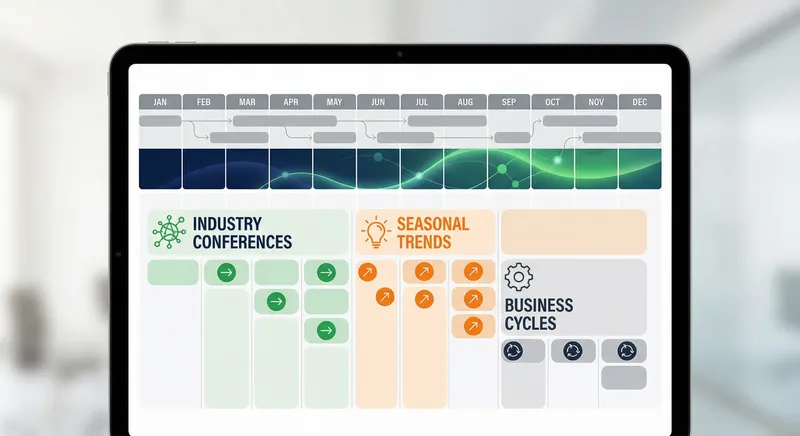
Industry events fall into several categories. There are major conferences and summits that happen annually and draw significant attention from your target audience. There are award seasons and recognition programs that create opportunities for celebrating achievements and discussing excellence. There are earnings reports and market releases that spark analysis and discussion. There are regulatory changes and compliance deadlines that affect your industry. And there are skill development seasons - times when your audience is most focused on learning and growth.
Beyond industry-specific events, broader cultural and business moments matter too. Q1 is universally focused on goal-setting and planning. Q4 brings year-end reviews and reflection. Back-to-school season affects more industries than just education. Summer and holiday periods shift audience behavior and availability. Understanding these macro patterns helps you time your content for maximum relevance.
Creating Your Event Timeline
Start by listing every significant industry event, conference, and trend cycle relevant to your audience. Include the dates, what makes them important, and which audience segments they affect most. Research past years to understand timing - many events happen on similar dates annually, making them predictable.
Next, identify the content opportunities around each event. A major conference isn't just a three-day event - it's actually a four-to-six-week content opportunity. You can create anticipation posts before the event, live coverage and insights during, and deeper analysis and takeaways after. Award seasons similarly span months, from nominations opening through winners being announced through year-end celebrations.
For trend cycles, map when they typically peak. If your industry sees budget allocation cycles in Q3 and Q4, start your content around budget planning in Q2. If there's a skill that becomes critical during certain seasons, begin educational content three to four weeks before peak season when people are most motivated to learn.
Structuring Your Seasonal Calendar Framework
Now that you understand your pillars and have identified key industry moments, it's time to build your actual calendar. This framework should be flexible enough to adapt to unexpected opportunities while structured enough to guide your content creation consistently.
The most effective approach uses a quarterly structure with monthly detail. This allows you to see the big picture while maintaining manageable monthly planning. For each quarter, identify three to four major themes or focus areas. These might be industry events, seasonal business cycles, or strategic focuses. Then, within each month, map specific content ideas tied to these themes while maintaining your core pillars.
The Monthly Content Mix
Within each month, balance your content across different types and purposes. A healthy mix typically includes thought leadership content that establishes expertise, tactical how-to content that provides immediate value, industry analysis and insights that demonstrate market awareness, personal stories and authenticity that build connection, and engagement-focused content that sparks conversation.
A practical approach is planning two weeks of content in advance while leaving flexibility for the other two weeks. Your planned content addresses seasonal moments and maintains pillar consistency. Your flexible content lets you respond to breaking industry news, unexpected trends, or audience questions that emerge during the month.
Within this structure, establish a posting rhythm. Most professionals find success with two to four LinkedIn posts per week, depending on their audience and goals. Consistency matters more than volume, so choose a rhythm you can sustain. If you're posting three times weekly, you might dedicate one post to your seasonal focus, one to a core pillar that's strong that month, and one to engagement or personal connection.
Batching Content for Efficiency
One of the biggest advantages of a seasonal calendar is the ability to batch-create content. Instead of creating one post at a time, you can dedicate specific days to writing multiple posts around a theme, which is far more efficient and maintains consistent voice and quality.
For example, dedicate one day per month to creating all your conference-related content for the next two months. Dedicate another day to your thought leadership pillar. This approach means you're entering the right mindset once and producing multiple pieces, rather than context-switching constantly. It also means you can use tools and templates more effectively, improving your process over time.
During batching sessions, you'll also catch opportunities to create content series - multiple connected posts that explore a topic deeply. A series about navigating industry change might include five posts over two weeks. A series about a particular skill might span a month. Series drive higher engagement because they give people a reason to follow your content closely and return to your profile repeatedly.
Integrating Industry Trends and Cultural Moments
While your seasonal calendar provides structure, the most engaging content calendars also remain responsive to emerging trends and cultural moments. This means building in flexibility and monitoring mechanisms throughout your year.
Set aside approximately 20 - 30 percent of your monthly content capacity for responsive, timely content. This might be news related to your industry, emerging trends in your field, broader business or technology developments that affect your audience, or cultural moments that create relevant conversation opportunities. This flexibility ensures you're not just following a rigid plan but actively participating in your industry's conversations.
To stay on top of emerging opportunities, establish a weekly review habit. Spend 15 minutes each week scanning industry news, LinkedIn trends, and audience conversations. Note anything that could be relevant content. If something aligns with your expertise and audience needs, it becomes a priority post that week. If it's interesting but less critical, it goes into an ideas bank for future use.
The best seasonal calendars aren't rigid plans - they're strategic frameworks that guide your thinking while leaving room for the unexpected moments that often generate the most engagement and relevance.
This approach also means you're never caught off-guard by major industry moments. When a significant event happens in your space, you can respond quickly with thoughtful, timely content because you understand your pillars and have a planning system in place. You're not starting from scratch - you're applying your existing framework to a new situation.
Handling Seasonal Flexibility
Different months may require different content mixes based on industry cycles and audience behavior. Some months might warrant more tactical content because your audience is focused on execution. Other months might be better for thought leadership and strategic thinking. Your calendar should reflect these natural variations.
Similarly, some months may be slower in your industry, requiring you to shift focus or go deeper on certain topics. Other months might be incredibly busy, meaning your audience has less time to consume long-form content. Adjust your content format and length accordingly. During busy seasons, shorter posts and quick tips perform better. During slower periods, you can explore longer-form content and deeper dives.
Leveraging Content Formats Strategically
A comprehensive seasonal calendar isn't just about content topics - it's also about varying your formats to maintain audience interest and reach different consumption preferences. Throughout your year, strategically rotate between different content formats aligned with seasonal opportunities.
Text-based posts remain the foundation of LinkedIn content, but they're most effective when varied in style. Some posts should be quick insights or hot takes. Others should tell stories. Still others should pose questions or share frameworks. By varying your text approach, you maintain freshness and appeal to different audience preferences.
Seasonal moments create natural opportunities for specific formats. Industry conferences are perfect for live commentary and real-time insights. Award seasons are ideal for celebration posts and analysis of what makes winners successful. Year-end periods are perfect for reflection and lessons-learned content. Budget planning seasons are ideal for framework and strategy content. By matching format to seasonal opportunity, you maximize relevance and engagement.
Educational content and how-to posts perform particularly well during seasons when your audience is most motivated to learn. Storytelling and personal narrative content works well during slower seasons when people have more time to engage deeply. Data-driven analysis and industry insights work well when tied to earnings seasons, conference announcements, or market releases.
Visual and Interactive Elements
While text remains primary on LinkedIn, incorporating visual elements strategically throughout your seasonal calendar improves engagement. Plan to include visual content - whether custom graphics, data visualizations, or curated images - in approximately 30 - 40 percent of your posts.
Certain seasonal moments call for specific visual approaches. Year-end reviews and lookbacks benefit from infographics showing trends or achievements. Conference coverage benefits from behind-the-scenes photos or live event graphics. Industry analysis benefits from charts and data visualization. Personal stories benefit from authentic photos. By planning visual elements as part of your seasonal strategy, you ensure consistency and professionalism.
Practical Implementation: Building Your Calendar Step-by-Step
Now let's move from theory to practice. Here's how to build your actual seasonal content calendar, starting today.
Step One: Document Your Core Pillars
Spend an hour identifying your three to five core content pillars. Write a brief description of each - what it covers, why it matters to your audience, and what expertise you bring. Be specific. "Leadership" is too broad. "Building psychological safety in remote teams" is specific and actionable.
Step Two: Create Your Industry Event Timeline
Research and list every significant industry event, conference, award season, and trend cycle relevant to your audience. Include dates, duration, and what makes each significant. Add broader business cycles like Q1 planning, Q4 reviews, and seasonal hiring patterns. Aim for at least 15 - 20 major moments across the year.
Step Three: Map Your Quarterly Themes
For each quarter, identify two to three major themes that will guide your content. These might be tied to industry events, seasonal cycles, or strategic focuses. Q1 might be "New Year, New Strategies." Q2 might be "Industry Conference Season and Hiring Surge." Q3 might be "Mid-Year Pivots and Summer Slowdown." Q4 might be "Year-End Reviews and Planning Ahead." These themes aren't rigid - they're directional.
Step Four: Plan Your Monthly Content Mix
For each month, identify three to four specific content ideas tied to your quarterly theme while maintaining your core pillars. Create a simple spreadsheet with columns for date, topic, pillar, content type, and notes. You don't need to plan every single post - aim for 60 - 70 percent planned and 30 - 40 percent flexible for emerging opportunities.
Step Five: Establish Your Posting Rhythm
Decide how frequently you'll post - whether that's two, three, or four times per week. This should be sustainable given your other responsibilities. Enter these posting dates into your calendar as placeholders. This ensures you have enough content ideas planned to fill your schedule.
Step Six: Set Up Your Batching Schedule
Identify specific days each month when you'll batch-create content. Mark these on your calendar. For example, you might dedicate the first Friday of each month to creating all thought leadership content for the next two months. This creates a sustainable rhythm and improves your efficiency dramatically.
Step Seven: Build in Review Checkpoints
Schedule monthly reviews of your calendar and performance. Spend 30 minutes each month looking at what content performed well, what your audience engaged with most, and what you might adjust for the next month. This continuous learning loop ensures your calendar gets smarter over time.

Maintaining Flexibility While Staying Consistent
One of the biggest misconceptions about content calendars is that they're rigid plans that leave no room for spontaneity. In reality, the best calendars are frameworks that guide your thinking while remaining flexible enough to capture unexpected opportunities.
Your calendar should answer the fundamental question: "What should I be thinking about this month?" But it shouldn't dictate exactly what you post on Tuesday at 2 PM. That level of flexibility is what allows you to respond to breaking news, audience questions, and emerging trends while still maintaining strategic direction.
Build in a weekly review habit where you assess what's happening in your industry and what your audience is discussing. If something significant emerges that aligns with your expertise, bump it up in your content queue. If a question comes up repeatedly in your network, create a post addressing it. This responsiveness combined with strategic planning is what creates truly effective LinkedIn presence.
Similarly, be willing to adjust your calendar quarterly. After three months of following your plan, you'll have data about what resonates most with your audience. You'll understand which seasons are stronger for certain content types. You'll see which pillars drive the most engagement. Use this learning to refine your next quarter's plan. Your calendar should evolve as you learn more about your audience and what serves them best.
Measuring Success and Optimizing Your Calendar
A seasonal content calendar only works if you're measuring its effectiveness and continuously optimizing. This doesn't mean obsessing over vanity metrics, but rather understanding what resonates with your audience and adjusting accordingly.
Track three categories of metrics. First, engagement metrics - which posts get the most comments, shares, and meaningful interactions. This shows what your audience finds most valuable. Second, reach metrics - which posts reach the most people. This shows what LinkedIn's algorithm is amplifying. Third, conversion metrics - which content leads to meaningful business outcomes like profile views from your target audience, connection requests from ideal clients, or inquiries about your services.
Most important is identifying patterns. Do your audience engagement posts perform better on certain days? Do thought leadership posts from certain pillars outperform others? Do posts tied to industry events get more reach? Do longer-form posts or shorter posts drive more comments? These patterns inform your next calendar iteration.
Create a simple monthly performance review. Spend 20 minutes reviewing your top-performing content from the month. Note what topics resonated, what formats worked best, and what your audience engaged with most. Feed these insights into your next month's planning. Over time, your calendar becomes increasingly optimized for your specific audience.
The most successful content creators treat their seasonal calendar as a living document. It guides their strategy, but it's refined continuously based on what they learn about their audience and what works in practice.
Automating Your Calendar Management
Once you've built your seasonal calendar, the next step is making it sustainable through automation and smart systems. The goal is to reach a point where consistent, strategic content creation requires minimal daily effort because your systems handle the heavy lifting.
Start by centralizing your calendar in one location. Whether that's a spreadsheet, a project management tool, or a dedicated content platform, having everything in one place ensures you're never scrambling for ideas or losing track of what you planned. This central calendar becomes your source of truth.
Next, establish templates for your most common content types. If you regularly create thought leadership posts, develop a template with your typical structure - hook, insight, supporting detail, call to action. If you create how-to content, build a template with step-by-step structure. These templates dramatically speed up your writing process and ensure consistency.
Finally, consider tools that can help automate the entire content creation process. Modern AI-powered writing assistants can help you generate initial drafts based on your calendar and pillars, significantly reducing the time from idea to finished post. You're still writing and editing - you're just removing the blank page problem and accelerating the drafting phase.
Adapting Your Calendar Across Industries
While the framework we've outlined works across industries, different sectors have different seasonal patterns and industry moments. Let's look at how to adapt this approach for different professional contexts.
For technology professionals, key seasonal moments include product launch seasons, conference season (often spring and fall), hiring surges (spring and summer), and year-end planning. Your calendar might emphasize innovation and emerging tech trends in spring, hiring and talent discussions in summer, industry analysis in fall, and strategic planning in winter.
For consultants and service providers, seasonal moments include client budget cycles (often Q3 and Q4), industry conference season, award seasons, and slower summer periods. Your calendar might emphasize business case studies and ROI discussions in budget season, thought leadership at conference time, celebration content during awards season, and deeper strategic content during slower periods.
For sales and business development professionals, key moments include quarter-end pushes, industry events where prospects gather, hiring seasons when companies are expanding, and year-end reviews. Your calendar might emphasize social selling and relationship-building content consistently, with increased tactical content during high-activity seasons.
For educators and learning professionals, seasonal moments include back-to-school season, new year goal-setting, mid-year assessments, and year-end reviews. Your calendar might emphasize learning strategies in January and August, assessment discussions in May and November, and reflection content in December.
The principle remains consistent across all industries: identify your specific seasonal moments and industry cycles, map your expertise against them, and plan content that addresses what your audience needs during each season. The specifics change, but the framework stays the same.
Building Your Content Strategy for Long-Term Success
A seasonal content calendar is more than a planning tool - it's the foundation of a sustainable, strategic approach to building your LinkedIn presence. When you move from reactive, last-minute content creation to intentional, planned content aligned with industry moments and audience needs, everything changes.
You stop feeling like you're always behind on content. You stop struggling to come up with ideas. You stop missing critical industry moments. Instead, you show up consistently with relevant, timely content that demonstrates genuine expertise and understanding of your audience's world. You build trust and authority. You attract the right connections and opportunities.
The investment in building your seasonal calendar pays dividends throughout the year. The 4 - 6 hours you spend initially mapping your calendar, identifying industry moments, and establishing your framework saves you countless hours throughout the year. The consistency you achieve builds momentum. The relevance you create drives engagement. The strategic thinking you develop elevates your entire approach to professional visibility.
Start with one quarter. Build a solid plan for the next three months. Execute it. Learn from it. Refine it. Then expand to the full year. As this becomes your rhythm, content creation transforms from a burden into a sustainable practice that reinforces your expertise and builds your professional brand.