AudienceMx - Article
Long-Term Content Strategies That Survive Algorithm Changes
Build content strategy resilience with a practical framework for evergreen pillars and repurposing routines.

Content strategy resilience is the business capability that allows small teams and solo professionals to maintain visibility even when platforms change how they surface content. For LinkedIn professionals, content creators, and entrepreneurs, resilience means designing a system that prioritizes enduring value over temporary hacks. This post outlines a practical framework for building evergreen content pillars and repeatable repurposing routines. You will learn how to structure content around durable topic clusters, automate parts of the production cycle, and measure signals that matter so your personal brand and business remain discoverable as algorithms evolve.
The guidance here is tailored to the needs of busy content strategists, social media managers, and founders who need reliable systems more than one-off growth tricks. It focuses on small to mid sized teams who must balance high quality thought leadership with efficient execution. Use these tactics to reduce the risk of sudden visibility loss, to get more mileage from each idea, and to create a content operation that supports long term goals rather than short term spikes. Practical examples and a sample repurposing calendar will make it easy to implement the framework using AI assisted tools and disciplined editorial routines.
Why content strategy resilience matters now
Platform algorithms change frequently. Some updates reward new formats, some favor deeper engagement, and others change the types of content that show up in feeds. Relying solely on a single tactic or format is a brittle approach. Content strategy resilience is about building redundancy into your plan so that a shift in distribution rules does not erase months of effort. Learn more in our post on How AI Raises the Value of Human Voice in Professional Content.
For professionals focused on building a brand on LinkedIn or similar professional networks, visibility means being found by hiring managers, buyers, and collaborators. When your content approach is resilient, each piece contributes to a larger narrative. That narrative is discoverable through multiple channels including search, cross posting, newsletters, and direct outreach. By constructing your content program around durable pillars and repurposing routines, you can preserve reach when one channel reduces organic distribution.
Resilience also protects creative resources. Small teams cannot afford to reinvent the wheel every time an algorithm update rewards a new gimmick. A resilient approach prioritizes strategic reuse. It reduces waste and frees time for idea development, audience engagement, and iterative improvement. When your program centers evergreen topics and modular assets, you can respond to trends without losing core momentum.
Core benefits for small teams and individual professionals
- Predictable output that aligns with long term goals
- Lower cost per idea through repurposing and templates
- Stronger brand recall because content reinforces a consistent message
- Faster onboarding for contributors because processes are documented
Build evergreen content pillars that outlast format changes
At the heart of content strategy resilience are evergreen pillars. Pillars are broad themes tied to your expertise and audience needs. They guide topic selection and ensure each piece of content contributes to a coherent brand story. For a LinkedIn professional, pillars might include career advice, industry analysis, case studies, and how to use AI for productivity. Choose pillars that match your experience, business goals, and audience pain points. Learn more in our post on Turn One Idea into Five LinkedIn Posts: Repurposing Frameworks That Scale Your Voice.
To create pillars that last, follow three design rules. First, prioritize audience questions that do not age quickly. Second, map each pillar to measurable outcomes such as leads, connections, or speaking invitations. Third, define the formats that best express each pillar, but do not tie a pillar to a single format. A how to topic should be expressible as a long form post, a short checklist, a short video, and a downloadable guide.
Step by step pillar formation
- Audit your past content to identify recurring themes that drove engagement and meaningful outcomes.
- Interview customers, colleagues, and prospects to surface the questions they repeatedly ask.
- Rank potential pillars by business value and audience demand. Keep three to five core pillars to maintain focus.
- Define content objectives for each pillar. For example, “Establish thought leadership in product design” or “Generate inbound qualified leads for consulting services.”
- Create an idea backlog tied to each pillar and assign priority and format flexibility to each idea.
Designing pillars with format flexibility is vital. If an algorithm stops favoring a given content type, the underlying topic still performs if presented differently. This design reduces the chance that an update wipes out months of momentum.
When you plan pillar content, include a metadata system for each asset. Tag each item with pillar, buyer journey stage, format, primary CTA, and reuse potential. This metadata speeds repurposing and helps you maintain consistent messaging across posts.
Repurposing routines that compound value
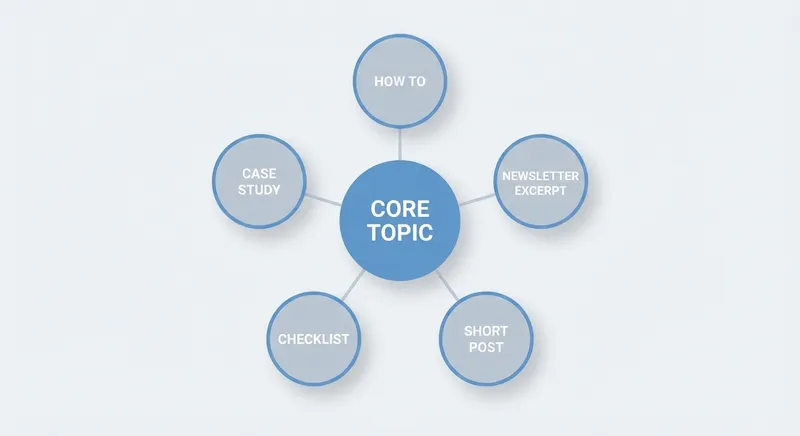
One core tenet of content strategy resilience is that repurposing multiplies reach while reducing effort. A single long form article or a recorded talk can be transformed into dozens of micro assets. The key is to systemize repurposing so it becomes part of the production workflow rather than an afterthought.
Start with an initial flagship asset per idea. This could be a long article, a recorded webinar, or a research brief. From that flagship, extract bite sized posts, quote cards, short videos, and newsletter segments. Maintain a checklist for each flagship content piece so repurposing happens within 48 hours of publication. Immediate repurposing captures momentum and allows you to test which micro formats resonate with your audience.
Repurposing playbook
- Create the flagship asset and publish it to your primary channel.
- Within 48 hours, generate at least five micro assets from the flagship.
- Schedule micro assets across a 6 to 8 week cadence so the topic remains visible but fresh.
- Track performance by asset type and feed those learnings back into future planning.
- Archive the flagship with reusable snippets and timestamps for quick retrieval.
To make repurposing efficient, use templates for headlines, hooks, and post structures. For professionals using AI writing tools, maintain a library of prompts that convert long form sections into short post variants in the voice of the brand. Integrating these prompts into your editorial calendar shortens turnaround time and ensures consistency.
Repurposing is also a hedge against algorithmic volatility. If a feed favors short posts for a while, you will already have short posts ready. If video gets a boost, you can repurpose audio from webinars into short video clips. This flexibility allows a small team to stay adaptive without losing the content thread that defines their brand.
Systems and processes that scale resilience
Content strategy resilience is not only a matter of ideas. Processes and systems determine how reliably ideas turn into visible assets. Small teams should standardize the basics so that quality remains high and speed increases. A documented production pipeline reduces single points of failure and ensures each content item is optimized for visibility and impact. Learn more in our post on Scale Thought Leadership: AI-Assisted Long-Form Post Drafting for Busy Experts.
Key process components include editorial calendars, content templates, approval workflows, and a repurposing checklist. Use automation for scheduling and routine transformations. For example, when a flagship article is approved, automation can create a task list for repurposing, generate prompt templates for AI drafting, and schedule posts across the calendar. This level of automation preserves capacity for strategy and engagement rather than repetitive manual work.
Roles and responsibilities
- Content Owner: Sets pillar strategy and approves major assets.
- Creator: Produces flagship assets and initial drafts.
- Editor: Ensures voice, clarity, and adherence to brand rules.
- Repurposing Specialist: Converts flagships into micro assets and manages scheduling.
- Analyst: Tracks performance and surfaces insights to improve future content.
For solo operators, these roles can be combined. The important part is to maintain discipline by treating each role as a separate checklist that must be completed for every flagship asset. That discipline multiplies your ability to respond to changes in distribution logic and keeps your content program aligned to outcomes rather than vanity metrics.
Documenting your systems also helps onboarding. When you scale a small team, shared templates and an established cadence accelerate ramp up and preserve voice and quality.

Measurement that supports resilient decision making
Measuring the right signals is essential for content strategy resilience. Metrics should reflect the behaviors that matter for your business. For a LinkedIn professional or small business owner, that often means measuring conversion actions such as profile views from target audiences, direct messages with qualified prospects, newsletter sign ups, or requests for consultations. Engagement metrics like reactions and comments are useful, but only when correlated with real outcomes.
Track pillar level performance, not just individual posts. An individual post may go viral by chance and not deliver lasting value. Pillar level measurement aggregates performance across all assets tied to a theme and reveals whether a topic is building reputation and pipeline over time. Use cohort analysis to see how audiences exposed to a pillar behave differently than those who are not.
Key metrics to track
- Audience growth in target segments such as hiring managers, buyers, and partners
- Inbound messages or connection requests that align with buyer profiles
- Profile views from target industries or job titles
- Conversion events like newsletter sign ups, resource downloads, or consultation bookings
- Engagement quality metrics including long form comments and shares that indicate discussion
Combine quantitative metrics with qualitative signals. Save representative comments, messages, and threads that demonstrate how your ideas are landing. Qualitative feedback is often the first sign that a pillar is resonating deeply and should be expanded. When algorithm updates reduce raw reach, these qualitative relationships sustain momentum by generating direct conversations and referrals.
When you run experiments, design them to test variables such as format, hook, posting cadence, and timing. Track tests at the pillar level and use simple statistical thinking to determine what changes materially affect outcomes. The goal of measurement is certainty about what to scale and what to stop investing in.
Content formats and tactical examples for resilience
Different formats give you different kinds of reach. To maximize content strategy resilience, choose a balanced mix that aligns with your pillars and repurposing capacity. For many professionals, a core format mix might include long form articles, short professional posts, audio clips, and downloadable resources. Each format serves a distinct purpose in the funnel.
Here are tactical examples mapped to pillar types.
How to and skill development pillar
- Flagship: Deep how to article with step by step framework
- Repurposed: Six short posts each focused on one step; one checklist PDF; two short videos showing examples
- Outcome: Demonstrable expertise and consult requests
Case study and results pillar
- Flagship: Long case study describing problem, approach, and results with data
- Repurposed: Quote cards highlighting outcomes; a 60 second summary video; an article excerpt for newsletter
- Outcome: Credibility and trust for sales conversations
Point of view and leadership pillar
- Flagship: Opinion piece linking market change to recommended actions
- Repurposed: Short provocative posts to spark discussion; a recorded panel summarizing implications; a downloadable one page position paper
- Outcome: Thought leadership and speaking invitations
These examples show how coverage across formats provides multiple discovery points. Repurpose into formats the platform currently favors while keeping the flagship content as the authoritative source. That core content reinforces your message even when surface signals change.

Practical editorial calendar and 8 week repurposing example
To make resilience operational, adopt a simple calendar template that standardizes cadence for flagship publishing and repurposing activities. The example below is for an 8 week cycle around one flagship asset. This routine can be run in parallel across three to five pillars to maintain steady output.
- Week 1: Publish flagship article or record a webinar. Announce with a short personal post and a CTA to read or view the full asset.
- Week 2: Publish three short posts that highlight core lessons and invite discussion. Send a newsletter excerpt to subscribers with a pathway to the full asset.
- Week 3: Release two short videos or audio clips pulled from the flagship. Share one case snippet and one practical tip.
- Week 4: Publish a downloadable checklist or template tied to the flagship. Promote via a post with a clear conversion CTA.
- Week 5: Share a written case follow up that shows how a reader applied the framework. Encourage comments and testimonials.
- Week 6: Repackage content into a long form post for another channel or a guest publication. Cross link back to the flagship.
- Week 7: Run a short format recap and gather audience questions. Use these questions as seed ideas for future flagships.
- Week 8: Audit performance of the cycle, capture wins in a report, and update the idea backlog for the next cycle.
Running an overlapping set of cycles across pillars keeps your pipeline full. The overlapping approach means you consistently have new flagship assets while micro assets continue to drive engagement. It also ensures you can respond when a format temporarily performs strongly by reallocating micro asset distribution without halting production.
Common objections and how to address them
Small teams often raise similar objections when adopting a resilience approach. Below are common concerns and practical responses grounded in operational reality.
Objection 1: We do not have time to produce flagships and repurpose
Response: Reduce the number of flagships and increase repurposing efficiency. One solid flagship every three to four weeks, combined with strict repurposing checklists and AI assisted drafting, yields a high return on effort. Use batch production days and templates to compress work into predictable blocks.
Objection 2: Algorithms favor short bursts of viral content over slow building efforts
Response: A balanced approach that includes timely experimentation with short formats plus consistent pillar work hedges against volatility. Viral spikes are valuable, but they rarely sustain long term business outcomes. Focus your baseline on pillar performance while allocating a small percentage of capacity to experiments.
Objection 3: Our audience wants fresh ideas all the time not repeats
Response: Repurposing is not repetition. Thoughtful repurposing reframes the same core insight for different audience needs and contexts. When done well, repurposed content feels tailored and fresh because it targets a specific angle or use case.
Tools and technology to support resilience
Tools amplify your ability to deliver consistent content. For professionals and small teams, invest in tools that streamline drafting, editing, scheduling, and repurposing. Prioritize tools that support personalized post generation and content planning automation. Features that accelerate hook creation, provide tone improvement, and manage unlimited drafts offer disproportionate value for small teams focused on brand quality and speed.
Look for tools that integrate with your editorial calendar and that enable bulk transformations from long form to short posts. Open APIs and exportable metadata make it easier to track pillar performance and to feed data into your measurement stack. If you use AI assisted writing, maintain a library of prompts and style guides to ensure consistent voice across repurposed assets.
Checklist for tool selection
- Supports a repeatable pipeline for flagship creation and micro asset generation
- Offers personalization capabilities so posts reflect your voice and expertise
- Enables scheduling and automation of repurposed assets
- Integrates with analytics platforms to measure pillar level outcomes
- Scales with unlimited drafts and easy approval workflows
Investing in the right stack reduces friction and increases the odds that your team will follow the resilient plan consistently. The marginal cost of better tooling is often offset by reduced time to publish and higher quality outputs.
How to migrate an existing program to a resilient model
Migrating to a resilient model is a phased project that can be completed without disrupting current performance. Treat this as an optimization initiative rather than a complete overhaul. Below is a practical migration roadmap.
- Perform a content audit to map existing assets to candidate pillars.
- Identify three priority pillars based on business goals and past performance data.
- Create or refine templates for flagship assets and repurposed micro assets.
- Implement a single 8 week cycle for one pillar to serve as a pilot.
- Automate repurposing tasks and integrate them into your calendar and toolchain.
- Measure performance and iterate. Scale to additional pillars once the pilot shows predictable results.
Start small and validate. The pilot approach reduces risk and builds confidence among stakeholders. Once processes are proven, scale by adding more pillars and by delegating repurposing tasks to contributors or contractors who follow your templates and style guides.
Final checklist for content strategy resilience
Use this checklist to confirm your program is positioned to survive algorithm changes.
- You have three to five evergreen pillars aligned to business outcomes.
- Every flagship asset has a documented repurposing checklist executed within 48 hours.
- Roles and approval workflows are defined, even for solo operators.
- Metrics are tracked at the pillar level and include qualitative signals.
- Tools are in place to automate drafting, tone improvement, and scheduling.
- Your calendar runs overlapping 8 week cycles to maintain continuous output.
- You run small experiments regularly and feed learnings back into the pillar backlog.
Conclusion
Building content strategy resilience is a practical investment in long term visibility and brand stability. For LinkedIn professionals and small teams, resilience reduces dependency on any single platform behavior and increases the predictability of outcomes. By focusing on evergreen pillars, standardized repurposing routines, clear roles, and outcome oriented measurement, you create a content operation that can survive and thrive through platform updates.
Start with clarity. Define the three to five pillars that matter for your business and map each to measurable goals. Create a flagship asset cadence that you can sustain and pair it with a strict repurposing playbook. Automate repetitive tasks and use templates to keep voice consistent. Measure at the pillar level and combine quantitative metrics with qualitative signals. These steps minimize risk while increasing the effective reach of each idea.
For professionals who need speed with quality, AI assisted content tooling can be a force multiplier. Tools that generate personalized posts, improve hooks, and automate content planning make it easier to run multiple overlapping cycles without sacrificing voice or depth. If you are managing content on a small team or building a personal brand, adopt a resilient workflow that treats quality work as the foundation and repurposing as the mechanism that spreads that work broadly.
Finally, approach resilience as an iterative discipline. No plan survives unchanged forever. Use experiments to refine formats and update pillar priorities as market conditions shift. When you commit to consistent pillars and a repeatable repurposing system, you build cumulative advantage. Over time your content becomes a durable asset that continues to attract the right people even when distribution rules change.
Ready to make your content program resilient? Start by mapping your pillars and creating a one page repurposing checklist. If you want to accelerate drafting and scheduling, consider using AudienceMx to generate personalized posts, refine hooks, and automate content calendars. Try converting one flagship asset into five micro assets this week and measure how the approach improves consistent visibility and meaningful conversations.