AudienceMx - Article
From Lurker to Leader: A 90-Day Plan to Build Your LinkedIn Presence From Scratch
Learn how to build LinkedIn presence from scratch with this proven 90-day roadmap designed for professionals ready to establish thought leadership.

You've been scrolling through LinkedIn for months, maybe even years, watching others share insights, build networks, and establish themselves as thought leaders in their industry. But you've never posted anything yourself. The blank page intimidates you. You're not sure what to say, how to say it, or whether anyone would even care. Sound familiar?
This feeling of paralysis is more common than you might think. Many professionals understand the value of LinkedIn but struggle with the execution - they don't know where to start, how to optimize their profile, or what kind of content actually resonates with their audience. The gap between knowing you should build a presence and actually doing it can feel insurmountable.
The good news is that building a meaningful LinkedIn presence doesn't require you to be a natural writer, a social media expert, or someone with thousands of connections already. What it requires is a structured plan, consistent effort, and the right tools to support your journey. This 90-day roadmap is designed specifically for professionals who are starting from scratch - those ready to move from observer to active participant in their professional community.
Over the next three months, you'll optimize your profile, develop a sustainable content strategy, master engagement tactics, and hit concrete milestones that build momentum. By day 90, you won't just have a LinkedIn presence - you'll have the foundation for long-term professional growth and visibility.
Days 1-15: Foundation and Profile Optimization
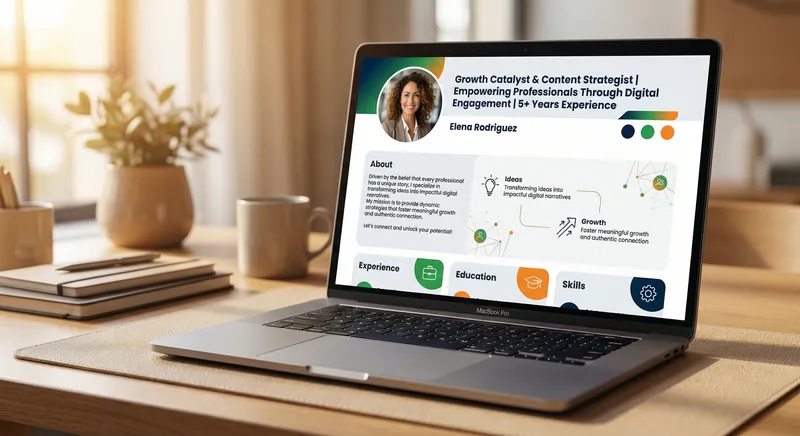
Your LinkedIn profile is your digital storefront. Before you post a single piece of content, you need to ensure that your profile accurately represents who you are and what value you bring to your network. This first phase is about creating a compelling foundation that makes visitors want to connect with you and follow your content. Learn more in our post on Maintain a Consistent Tone on LinkedIn: Build an Automated Style Guide for Your Profile.
Start with your profile photo. This is the first thing people see, and it matters more than you might think. Choose a professional headshot with good lighting, a clean background, and a genuine smile. You should be the clear focal point of the image, taking up about 60% of the frame. Avoid group photos, heavily filtered images, or anything that looks overly casual. Your photo communicates professionalism and approachability before anyone reads a single word.
Next, craft your headline. This isn't just your job title - it's your value proposition compressed into 120 characters. Instead of "Marketing Manager at Tech Company," try "Marketing Manager | Helping B2B SaaS Companies Scale Their Customer Acquisition | Content Strategist." Your headline should communicate what you do, who you help, and what makes you different. Include relevant keywords that people in your industry might search for when looking for professionals like you.
Your "About" section is where you tell your story. Write this in first person, as if you're speaking directly to someone visiting your profile. Start with a hook that captures attention - perhaps a surprising statistic, a challenge you've overcome, or a question that resonates with your target audience. Then explain your professional journey, your core expertise, and the specific problems you solve for people. End with a clear call-to-action, such as "Let's connect if you're interested in discussing [specific topic]" or "Reach out if you're navigating [common challenge]."
Your LinkedIn profile should answer three questions within the first 30 seconds: Who are you? What do you do? Why should I care?
Complete your experience section with detailed descriptions of your roles. Don't just list your responsibilities - highlight accomplishments and the impact you made. Use numbers when possible: "Increased team productivity by 35%" or "Led strategy that resulted in 200+ new client relationships." This gives visitors concrete evidence of your capabilities.
Add skills that are relevant to your industry and aligned with the content you plan to create. LinkedIn allows you to list up to 50 skills, and you can ask connections to endorse them. Focus on skills that are searchable and valuable in your field. If you're a content strategist, include "content marketing," "social media strategy," and "brand positioning" rather than generic terms.
Finally, customize your LinkedIn URL. Instead of a string of numbers, claim a clean URL like linkedin.com/in/yourname. This makes your profile easier to share and looks more professional when you include it in email signatures or on your website.
Days 16-30: Content Strategy and Finding Your Voice
Now that your profile is optimized, it's time to develop your content strategy. This phase is about identifying what you'll write about and establishing a consistent voice that reflects your personality and expertise. Learn more in our post on Create 30 Days of High-Quality LinkedIn Post Ideas in 60 Minutes Using an AI Tool.
Begin by defining your content pillars - the three to five main topics you'll focus on throughout your LinkedIn journey. These should align with your professional expertise and the interests of your target audience. For example, if you're a project manager, your pillars might be "Team Leadership," "Project Management Best Practices," "Remote Work Strategies," and "Career Development in Tech." Having clear pillars prevents you from feeling lost when it's time to create content and ensures your posts build a cohesive narrative about your expertise.
Next, identify your target audience with specificity. Don't just say "professionals in my industry." Instead, define exactly who you want to reach: "Mid-level marketing managers at SaaS companies who are struggling to prove ROI on their content investments." The more specific you are, the better you can tailor your content to address their actual pain points and challenges. Think about what keeps them up at night, what they're trying to achieve, and what obstacles they face.
Research your industry's most engaged content. Spend time scrolling through posts from people in your field who have strong engagement. What topics get the most comments? What formats seem to resonate - long-form articles, short tips, question-based posts, or story-driven narratives? Notice the common patterns in hooks, structure, and calls-to-action. You're not copying these creators; you're learning what your audience responds to so you can create content that serves them better.
Establish your voice and perspective. LinkedIn rewards authenticity, so your voice should reflect who you actually are. Are you direct and no-nonsense, or do you prefer a warm, conversational tone? Do you use humor, or do you keep things serious and focused? The key is consistency - your voice should be recognizable across all your posts. If you're naturally thoughtful and introspective, lean into that. If you're energetic and action-oriented, let that shine through. Authenticity builds trust faster than any polished corporate speak.
Create a content calendar for the next 30 days. You don't need anything fancy - a simple spreadsheet works perfectly. Plan to post three times per week during this phase. For each post, note the date, the topic, the pillar it relates to, and the main message you want to convey. This planning phase removes decision fatigue when it's time to actually write. You already know what you're writing about; you just need to execute.
Consistency beats perfection on LinkedIn. A decent post published regularly will outperform a perfect post you never quite finish.
Start collecting ideas and inspiration. When you read something interesting, see a relevant statistic, or have a professional insight, save it. Create a notes document or folder where you capture these ideas. This becomes your content bank - when you're ready to write but feeling uninspired, you have a repository of potential topics to draw from. Many successful LinkedIn creators spend time building this bank before they even publish their first post.
Days 31-60: Building Momentum Through Consistent Publishing
This is the phase where you move from planning to publishing. You've optimized your profile, defined your strategy, and identified your voice. Now it's time to start showing up consistently and building visibility in your network. Learn more in our post on Building Authority Through Niche Expertise: How to Own a Specific Topic on LinkedIn.
Post three times per week, sticking to your content calendar. Each post should follow a simple but effective structure: a compelling hook, the main body of your message, and a clear call-to-action. Your hook is crucial - it's what stops someone scrolling and makes them want to read more. Effective hooks can be surprising statements ("I spent 10 years doing this wrong"), questions ("What's the one skill most marketing managers lack?"), or relatable observations ("You know that moment when...").
Keep your posts scannable. Use short paragraphs, line breaks, and strategic use of emphasis to make your content easy to read on mobile devices. Most LinkedIn users are scrolling on their phones, so dense blocks of text will cause them to scroll past. Break up your ideas into digestible chunks. If you're sharing a list of tips, use numbers or bullet points. If you're telling a story, use short paragraphs to build momentum.
Include a clear call-to-action at the end of each post. This might be asking a question ("What's your biggest challenge with this?"), inviting connection ("Drop a comment if you've experienced this"), or directing traffic ("Check out my latest article on this topic"). A call-to-action increases engagement significantly - it gives your audience something specific to do rather than just consuming your content passively.
Engage with your network daily. This is just as important as publishing your own content. Spend 15-20 minutes each day engaging with posts from people in your network and industry. Comment thoughtfully on posts that resonate with you. Don't just say "Great post!" - add genuine value to the conversation by sharing your perspective, asking clarifying questions, or building on the original idea. When you engage authentically, people notice. They visit your profile, read your content, and often reciprocate by engaging with your posts.
Pay attention to what's working. Which posts get the most engagement? Which topics resonate most with your audience? Which formats perform best? LinkedIn provides analytics on your posts - you can see how many impressions, engagements, and profile visits each post generated. Use this data to refine your approach. If story-based posts consistently outperform tips, lean more heavily into storytelling. If your audience engages most with career development content, prioritize that pillar.
Respond to every comment on your posts, at least during this critical growth phase. When someone takes the time to comment, they're signaling interest in your content and in connecting with you. Responding shows appreciation, continues the conversation, and signals to LinkedIn's algorithm that your post is generating meaningful interaction. A post with 10 comments that you've responded to will reach far more people than a post with 50 comments you've ignored.

By the end of day 60, you should have published approximately 42 posts (three per week for four weeks). You'll have learned a tremendous amount about what resonates with your audience, and you'll likely see growth in your follower count and engagement metrics. This is the momentum phase - you're building habits and proving to yourself that you can sustain consistent content creation.
Days 61-90: Amplification and Authority Building
In the final 30 days of your 90-day plan, you shift from simply publishing to strategically amplifying your message and positioning yourself as a knowledgeable voice in your field. You've built momentum; now you're going to leverage it.
Introduce longer-form content alongside your regular posts. LinkedIn's native article feature allows you to publish in-depth pieces that go beyond the character limits of regular posts. These articles perform exceptionally well because they signal to the algorithm that you're creating substantive, valuable content. Write one article every two weeks during this phase. These might be deep dives into industry trends, comprehensive guides related to your expertise, or reflective pieces about lessons you've learned in your career. Promote these articles through your regular posts - share a compelling excerpt and link to the full article.
Develop a signature framework or methodology that you can reference across multiple posts. This might be a simple process you've created, a way of thinking about a common problem, or a step-by-step approach you've found effective. For example, a sales professional might develop "The 3-Step Qualification Framework," while a designer might share "My 5-Phase Design Thinking Process." When you have a signature approach that you reference repeatedly, you become associated with that idea, and it makes your content more memorable and shareable.
Create content that serves multiple formats. A single core idea can become a regular post, a longer article, a series of posts broken into parts, or a visual representation. This approach maximizes the value of your thinking and increases the likelihood that your ideas reach different segments of your audience who consume content in different ways. If you write a post about "Five Signs You Need to Pivot Your Career," you could expand that into an article, create a series of five posts (one for each sign), and develop a visual infographic representation.
Engage in strategic networking beyond content creation. Connect with people in your industry, complementary fields, and target audience. When you connect, include a brief, personalized message explaining why you want to connect. This is far more effective than generic connection requests. Once connected, engage with their content before promoting your own. This builds genuine relationships rather than simply broadcasting your message.
Repurpose and refresh your best-performing content. If a particular topic generated significant engagement, explore it from different angles. You might write about the same topic from a different perspective, update it with new information, or create a follow-up that builds on the original idea. This is not about recycling low-quality content - it's about recognizing what your audience values and serving that need more deeply.
Authority on LinkedIn isn't built through self-promotion. It's built through consistent delivery of valuable insights that help your audience solve real problems.
Start thinking about your unique angle or niche within your broader field. What can you say that others in your industry aren't saying? What perspective do you have based on your unique experiences? The professionals who build the strongest presences on LinkedIn aren't generalists - they're specialists who have a distinct point of view. This doesn't mean being contrarian for the sake of it; it means having a clear perspective grounded in your expertise and experience.
Measure your progress against concrete metrics. By day 90, you should track: your follower growth (aim for at least 100-200 new followers), average engagement rate (comments, likes, shares per post), profile views, and the growth in your network connections. More importantly, notice qualitative changes - are people reaching out to you for opportunities or advice? Are you having meaningful conversations in the comments? These signals matter more than raw numbers.
Document your journey and insights. Consider writing a reflection post at the 90-day mark about what you've learned, what surprised you, and what you'd do differently. This serves multiple purposes: it provides value to others considering starting their own LinkedIn journey, it demonstrates your willingness to share learnings and be vulnerable, and it reinforces your own learning. This kind of meta-content often performs exceptionally well because it's relatable and shows your growth mindset.
Sustaining Growth Beyond 90 Days
Completing the 90-day plan is a significant accomplishment, but it's really just the beginning. The habits and momentum you've built over these three months should continue and evolve. The key to long-term success on LinkedIn is moving from a rigid schedule to a sustainable rhythm that fits your life and career.
Continue posting regularly, but you can adjust frequency based on what you've learned. Some creators find that two high-quality posts per week outperform three mediocre ones. Others discover that their audience is most engaged on certain days or times. Use your analytics to optimize your posting schedule. The goal is consistency, not necessarily volume - it's better to post twice weekly without fail than to post five times weekly for a month and then disappear for two months.
Deepen your engagement strategy. As your network grows, you'll need to be strategic about where you invest your engagement time. Focus on engaging with content from people in your target audience, industry leaders you want to learn from, and people whose content aligns with your pillars. Quality engagement - thoughtful comments that add value - will always outperform quantity.
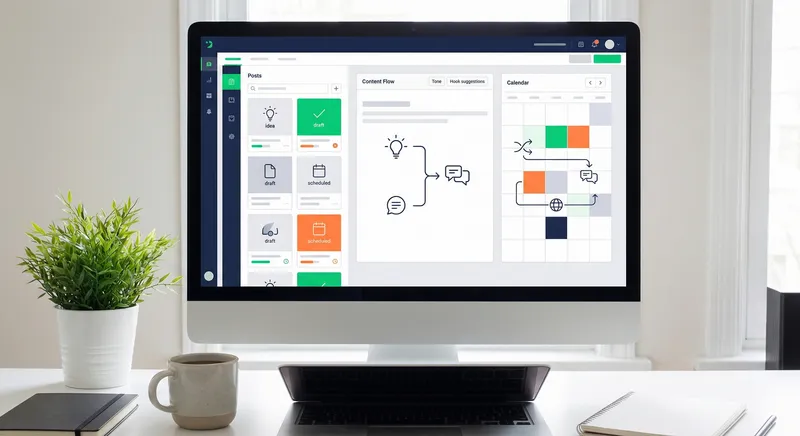
Invest in tools that support your content creation workflow. While consistency is more important than perfection, having tools that streamline your process makes it easier to maintain that consistency. Tools that help you brainstorm ideas, draft posts, improve your writing, and plan your content calendar can reduce the friction of content creation significantly. When the process is easier, you're more likely to stick with it long-term.
Continuously evolve your content based on what you're learning. Your first 90 days taught you what resonates with your audience. Use that knowledge to refine your content pillars, adjust your voice if needed, and explore new formats or ideas. LinkedIn's algorithm favors fresh, evolving content over repetitive posts, so don't be afraid to experiment while staying true to your core message.
Build strategic partnerships and collaborations. As you establish yourself as a knowledgeable voice in your field, look for opportunities to collaborate with other creators. This might be engaging in comment conversations with other creators' posts, co-creating content, or cross-promoting each other's work. These collaborations expose you to new audiences and add variety to your content strategy.
Key Milestones and Success Metrics
Throughout your 90-day journey, you should be hitting specific milestones that indicate you're on the right track. These milestones serve as motivation and validation that your effort is working.
Days 1-15: Your profile is complete and optimized. You should feel proud of how your profile represents you professionally. By day 15, you've done the foundation work, and you're ready to start creating content.
Days 16-30: You've published your first 15 posts. You've found your voice and identified patterns in what resonates. You should have received your first meaningful comments and have started building genuine conversations with your audience. Your follower count may have grown by 20-50 people.
Days 31-60: You've published 42 posts total. You're seeing clearer patterns in engagement. Your average engagement rate should be improving as you refine your approach. You've likely made several new meaningful connections. Your follower count should have grown by 50-150 people. You're starting to receive messages from people interested in what you're sharing.
Days 61-90: You've published 60+ posts, plus at least two longer-form articles. You're recognized as someone with something valuable to say in your field. Your engagement is consistent, and you're seeing direct benefits - job inquiries, collaboration requests, or business opportunities emerging from your presence. Your follower count should have grown by 100-250 people total. More importantly, you feel confident in your ability to create content and maintain your presence.
These milestones aren't about hitting arbitrary numbers - they're about building evidence that your effort is working and that you're on a trajectory toward meaningful professional growth. Some people will grow faster, some slower, and that's okay. The key is consistent progress.
Common Obstacles and How to Overcome Them
As you work through your 90-day plan, you'll likely encounter challenges. Knowing how to navigate these obstacles will keep you moving forward when motivation wanes.
Writer's block and idea fatigue: Even with a content calendar, you'll sometimes struggle to know what to write. The solution is to build a robust idea bank before you need it. Save articles, screenshots, questions from your network, observations from your day, and industry trends. When you sit down to write and feel stuck, you have a treasure trove of potential topics to explore. Also remember that not every post needs to be original - sharing your perspective on industry trends or responding to common questions in your field is valuable content.
Low initial engagement: Your first posts might get minimal engagement. This is normal and expected. Your network doesn't yet know you're creating content, and LinkedIn's algorithm takes time to learn what your content is about and who might be interested. Don't let early low engagement discourage you. Continue publishing consistently, and engagement will follow. After 20-30 posts, you'll start seeing patterns and momentum.
Imposter syndrome: You might feel like you don't have the right to share your expertise or that others are more qualified to speak on your topics. Remember that you don't need to be the world's leading expert to share valuable insights. You just need to be a few steps ahead of people starting where you started. Your perspective, shaped by your unique experiences, is valuable precisely because it's yours.
Time management: Creating content consistently takes time, and it's easy to let it slide when you're busy. The solution is to batch your content creation. Spend a few hours once or twice a week writing multiple posts. This is far more efficient than trying to write one post daily. You can also use tools that help you streamline the writing and editing process, reducing the time investment required.
Measuring success incorrectly: Don't obsess over follower counts or likes. These vanity metrics don't necessarily indicate real impact. Instead, measure success by engagement quality, meaningful connections made, and opportunities that emerge from your presence. A post with 50 thoughtful comments is more valuable than one with 500 likes and no engagement.
Tools and Resources to Support Your Journey
Several categories of tools can significantly support your 90-day plan and make content creation more sustainable.
Content ideation and planning tools: These help you brainstorm ideas, organize your content calendar, and plan your posting schedule. A simple spreadsheet works, but dedicated tools can provide templates, collaboration features, and integration with your calendar.
Writing and editing tools: Tools that help you draft posts more quickly, improve your writing, and refine your tone can dramatically reduce the friction of content creation. These tools can help you generate multiple versions of your post, improve your hooks, and ensure your writing is clear and scannable. The faster you can move from idea to published post, the more sustainable your content creation becomes.
Analytics and tracking tools: LinkedIn provides native analytics, but additional tools can help you track your growth over time, identify trends, and compare your performance across posts. Understanding what's working allows you to do more of it.
Networking and engagement tools: Tools that help you identify people to connect with, track your engagement, and manage your network can make the relationship-building aspect of LinkedIn more efficient and strategic.
The key is choosing tools that actually reduce friction for you rather than adding complexity. Start with the basics - a content calendar and a good writing process - and add tools as you identify specific pain points in your workflow.
The Psychology of Consistency and Building Habits
The 90-day timeframe isn't arbitrary - it's based on how long it takes to build a sustainable habit. Understanding the psychology behind habit formation can help you stay committed when motivation fades.
The first 30 days are the hardest because you're still building the neural pathways for the new behavior. You're forcing yourself to do something unfamiliar, and it requires conscious effort and willpower. This is why having a detailed plan for the first month is so important - it removes decision-making and reduces the willpower required.
By days 31-60, the behavior starts to feel more natural. You've done it enough times that your brain is beginning to recognize the pattern. You're still conscious of the effort, but it's becoming easier. This is a critical phase because many people quit right here, thinking they're not seeing enough results yet. Push through this phase, and you'll reach the final stage.
By days 61-90, content creation starts to feel like part of your routine. You might actually miss it if you skip a day. This is when the habit truly forms, and when you can transition from forcing yourself to do it to genuinely wanting to do it. By day 90, you've created the foundation for long-term success.
Understanding this progression helps you set realistic expectations and persevere through the harder early phases. You're not trying to feel motivated every day - you're building a system and a habit that will sustain itself.
Conclusion: Your Path From Lurker to Leader Starts Now
The 90-day plan outlined in this guide is a proven roadmap for professionals who want to build a meaningful LinkedIn presence from scratch. It removes the guesswork, provides clear milestones, and creates a sustainable path from observer to active participant in your professional community.
The professionals who build the strongest LinkedIn presences aren't the ones with the most natural talent for writing or social media. They're the ones who commit to consistency, who engage authentically with their community, and who provide genuine value through their content. You have everything you need to do this - you just need a plan and the commitment to follow it.
Your 90-day journey will teach you more about your industry, your audience, and your own expertise than you might expect. You'll discover what you're genuinely passionate about discussing, what insights you have that others find valuable, and how to communicate in a way that resonates with your professional community. These learnings will serve you far beyond LinkedIn.
If you're feeling overwhelmed by the prospect of creating content consistently, remember that you don't have to do this alone. Tools designed specifically to support LinkedIn content creators can dramatically reduce the time and effort required. Imagine being able to turn your ideas into polished, engaging posts in a fraction of the time it currently takes. Imagine having a personalized content plan that removes the daily decision of what to write. Imagine having an AI assistant that helps you refine your hooks, improve your tone, and structure your posts for maximum engagement.
This is exactly what modern content creation platforms offer - they streamline the process from idea to published post, making consistency not just possible but sustainable. Whether you're using a dedicated tool or managing your content calendar manually, the most important thing is to start. Day 1 of your 90-day plan is the hardest day, and it gets easier from there.
Your LinkedIn presence is waiting to be built. The professionals in your network are waiting to hear from you. The opportunities that come from visibility and authority in your field are waiting for you to claim them. The only thing standing between you and a thriving LinkedIn presence is the decision to begin and the commitment to follow through for 90 days.
Start with your profile optimization this week. Set up your content calendar for the next month. Identify your three to five content pillars. Then, on day 1 of your plan, publish your first post. You'll be nervous, and it might not feel perfect, but you'll have taken the most important step - you'll have moved from lurker to leader. The rest is simply showing up consistently and refining your approach based on what you learn along the way.
Your professional growth and the visibility you deserve are on the other side of this 90-day commitment. The question isn't whether you can do this - you absolutely can. The question is whether you're ready to start.